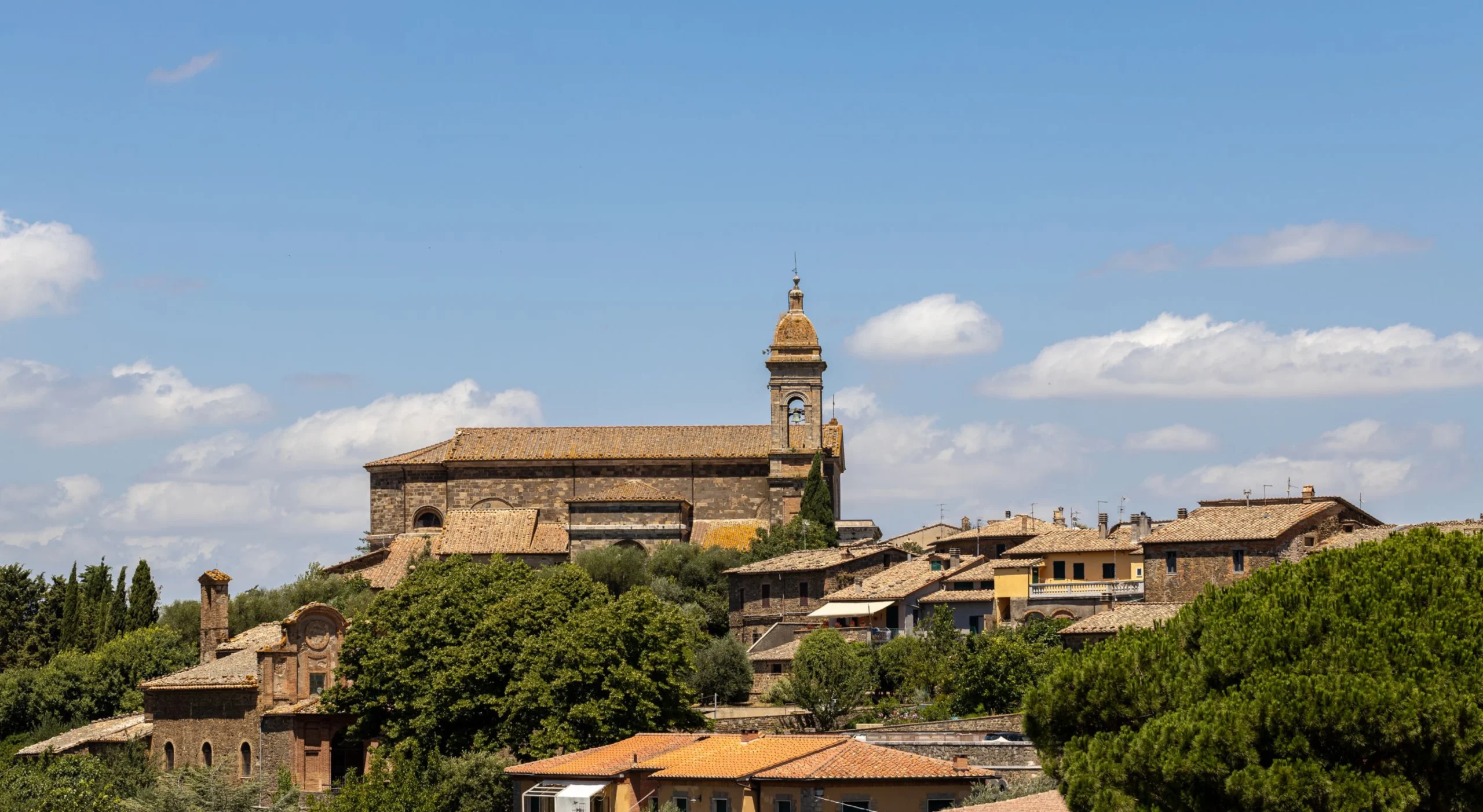
This small town in the Val d’Orcia south of the city of Siena has become world famous for Brunello.
Montalcino
Nestled between the Val d'Orcia, a UNESCO World Heritage Site, and the rolling hills of Siena, Montalcino is home to a landscape where nature, history, and viticulture have coexisted for centuries. A remarkable terroir that has made Brunello one of the world's most celebrated wines.
The area of the Municipality of Montalcino has an almost square shape, with ‘sides’ that are delimited by the Ombrone, Asso and Orcia rivers. It stretches up to 650 meters above sea level right next Poggio Civitella, which is the highest point in the district.
Montalcino is divided into four distinct quadrants, each defined by its own altitude, exposure, and microclimatic conditions.
Galestro, alberese, clay, and sandy deposits coexist across the Montalcino area, creating a rich mosaic of soils. Each vineyard benefits from its own unique conditions, shaping the character, structure, and elegance of the wine.
The Land
The four quadrants
In the North-west, the most wooded area of Montalcino is fresh, bountiful and has loose soil and is breezy. It is fairly fertile and richer than elsewhere.
In the North-east, the soils are varied, with large areas where clayey marls of Pliocene origin with clayey galestro soils are mixed with sand and gully formations predominate.
In the West, sea breezes carried by the northwest wind disperse their brackish waters on the grapes. The soil here is coarser, crumbly, airy and stony. But some clay is also present with a rich range of minerals available.
In the South, the land forms an ideal basin, sheltered from prevailing winds. The average temperature is higher, which produces earlier vegetative development in the vines. In this area, rain is rarer and the soils are more permeable, rich in stony matter and limestone. They are not very fertile and are dry, rustic and difficult to cultivate, and distinctly rugged.
The Four Stages
of Winemaking
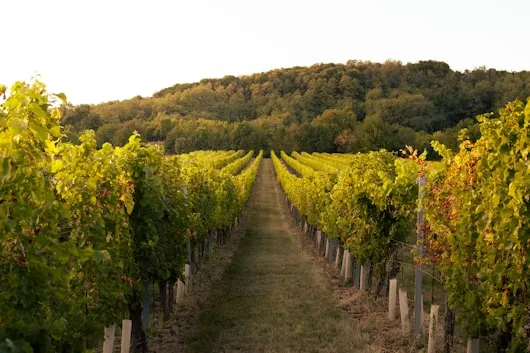
Vines earmarked for the production of Brunello di Montalcino are planted on hilly terrain characterized by excellent exposure to the sun and boasting mineral-rich, typically calcareous soil. This type of land confers unique characteristics of structure and complexity on the wine.
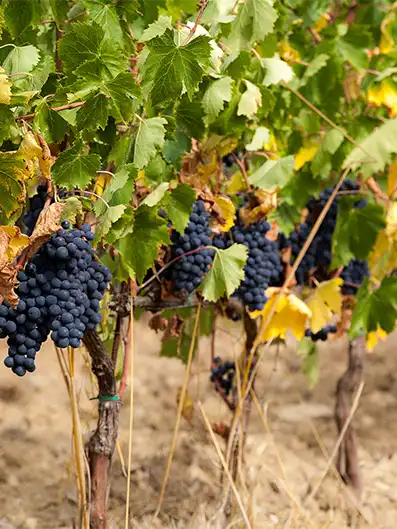
During the summer and autumn, the grapes earmarked for the production of Brunello reach complete ripeness. Harvesting is conducted manually, carefully selecting the best bunches and transporting them to the winery for the winemaking process.
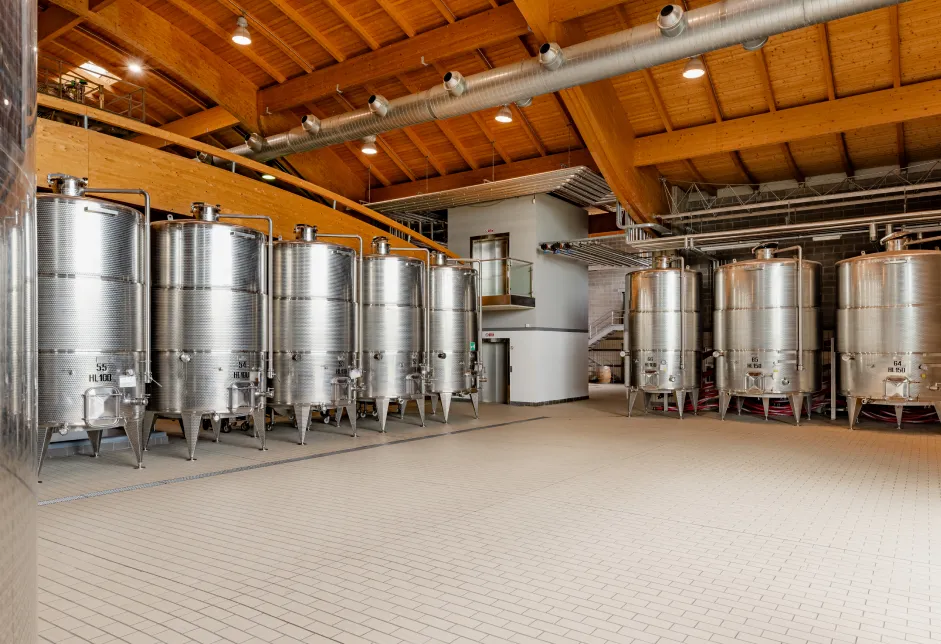
The Brunello di Montalcino fermentation process is a crucial stage in the production of this prestigious Tuscan wine. Fermentation transforms the grape must into wine, giving Brunello its distinctive organoleptic characteristics.
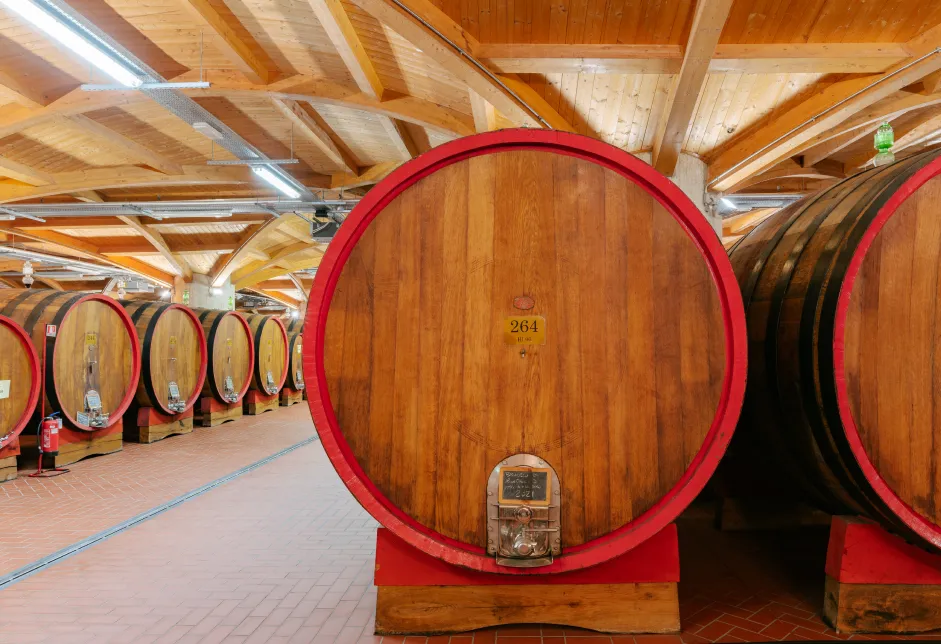
Before it can be released, Brunello di Montalcino must undergo a long ageing process in oak casks, allowing the wine to evolve slowly, steadily, and under carefully controlled conditions. Only five years after harvest is the wine finally ready to be enjoyed, revealing the full complexity and elegance developed over time.